A structural-steel package can be on the critical path long before the first fireproofing crew arrives. The choice between cementitious versus intumescent fireproofing affects steel-release sequencing, trade coordination, inspection requirements, finish expectations, and the risk of costly corrective work later. Neither system is automatically the right answer. The right system is the one that matches the required tested assembly, the building conditions, and the way the project will actually be built.
For commercial construction teams, the decision should begin with the fire-resistance rating and listed design, not with a product preference. A one-, two-, three-, or four-hour rating is not simply a thickness target. It is a tested system with specific requirements for steel size, member type, coating material, thickness, primers, attachment conditions, and sometimes protection from damage or weather.
Cementitious Versus Intumescent Fireproofing: The Core Difference
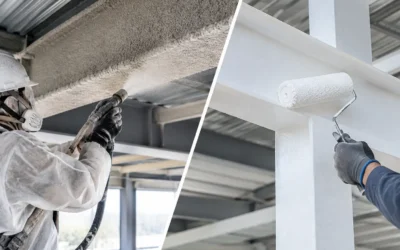
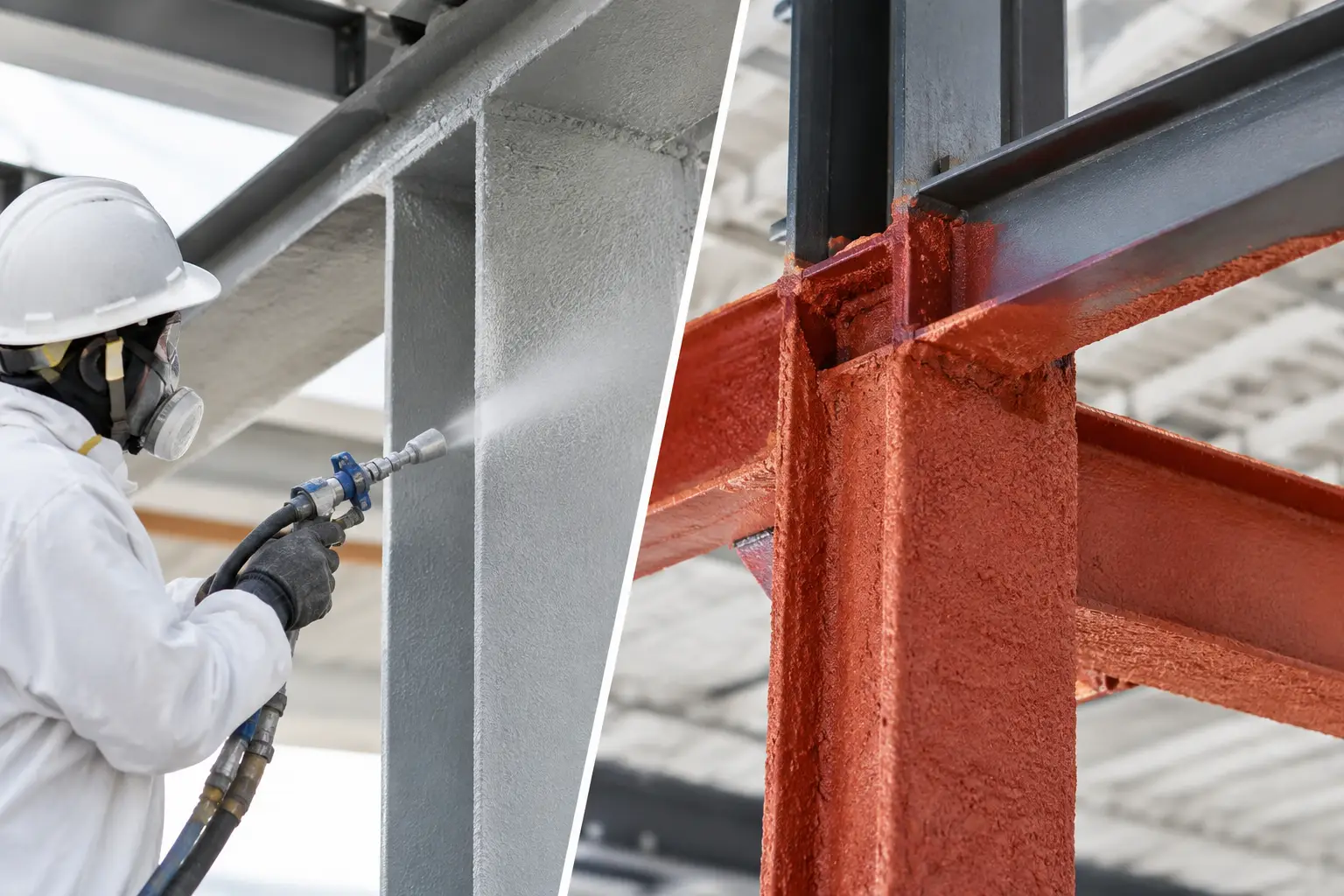
Cementitious fireproofing is generally a spray-applied fire-resistive material, or SFRM. It is applied in a relatively thick layer around structural steel to slow the rate at which steel heats during a fire. These materials are commonly gypsum- or cement-based and may be formulated for different density, durability, and exposure requirements.
Intumescent fireproofing is a thin-film reactive coating. Under fire exposure, the coating expands into a protective char layer that insulates the steel. Before activation, it can resemble a paint or high-build coating, making it a common choice where exposed structural steel is part of the finished architectural design.
Both systems can protect structural steel when installed within an approved tested design. The key distinction is not which material is “more fireproof.” It is how each system performs in the field, how it is specified, and what it demands from the project team before it can pass inspection.
When Cementitious SFRM Makes Practical Sense
Cementitious SFRM is often the efficient choice for concealed structural steel in commercial buildings. Parking structures, institutional projects, multifamily construction, warehouses, mechanical spaces, and interior framed areas frequently benefit from a spray-applied system because it can cover substantial quantities of steel quickly once the work area is ready.
Its installation is productive, but the word “spray” should not suggest a low-control scope. Proper application depends on substrate condition, compatible primers, ambient conditions, thickness control, density requirements, adhesion, and full coverage at flanges, webs, connections, and irregular steel geometry. A crew that moves quickly without controlling these details can create thin spots, poor adhesion, overspray problems, or failed density and thickness testing.
SFRM also requires realistic coordination. Steel must be sufficiently complete and accessible. Work that follows too closely behind fireproofing – such as welding, mechanical supports, electrical rough-in, or ceiling-hanger installation – can damage the material and generate repair scope. Good sequencing protects both the fireproofing system and the schedule.
For many projects, the economics are favorable. Material and installation costs are commonly lower than intumescent systems for broad areas of concealed steel. That advantage can shrink, however, when the job has high ceilings, difficult access, extensive masking needs, significant patching exposure, or a schedule that forces fragmented mobilizations.
Where Intumescent Coatings Are the Better Fit
Intumescent coatings are most often selected when steel will remain visible. Lobbies, atriums, open office environments, hospitality spaces, retail interiors, renovation work, and architecturally expressive structures may call for a fire-resistive system that preserves the profile of the steel rather than building it out with a thicker sprayed material.
The visual result is only one part of the decision. Intumescent systems can also be appropriate where space is tight, where a thick SFRM application would conflict with other assemblies, or where the design requires a smoother finish. Yet those benefits come with a more demanding installation process.
Surface preparation is especially consequential. The approved system may require a particular primer, a compatible topcoat, and documented preparation of the steel. Coating thickness is measured in dry film thickness, often at numerous locations on each member. If the coating is too thin, the rating may not be achieved. If it is too thick, the applicator may face cracking, curing, appearance, or manufacturer-compliance issues.
Environmental controls matter as well. Temperature, humidity, substrate temperature, dew point, and cure times can all affect application. On an active jobsite, that may mean planned containment, controlled work zones, and close coordination with painters, drywall crews, mechanical trades, and the general contractor. Intumescent coating is not a last-minute paint scope. It needs the same disciplined planning as any other rated protection system.
Rating Requirements Control the Selection
The most common avoidable mistake is treating fireproofing as a generic specification line item. A project team may identify a required hourly rating, select a preferred material, and assume the installer can make the rest work in the field. That approach can fail when the selected product does not match the listed design for the actual member configuration, primer condition, exposure, or required rating.
A compliant path starts by confirming the governing code requirements and the specific tested assembly. UL-listed designs and manufacturer specifications establish the conditions under which the fire-resistance rating applies. The authority having jurisdiction may also have project-specific expectations for special inspections, testing, documentation, or repair verification.
This is where early consultation protects the schedule. Before procurement or mobilization, the fireproofing specialist should review the structural drawings, specifications, steel coatings, rating requirements, architectural finish intent, and likely field constraints. Questions about galvanized steel, shop-applied primers, exterior exposure, accelerated sequencing, or visible members are much less expensive to resolve before installation begins.
Cost Is More Than Material Price
Comparing bids only by square-foot price can produce the wrong decision. Cementitious SFRM may carry a lower installed cost across a large concealed-steel area, while intumescent coating may justify its higher cost where exposed steel eliminates the need for enclosure or supports the design intent.
The full comparison should include surface preparation, primers and topcoats, access, masking, containment, cure time, finish requirements, inspection testing, repair exposure, and the cost of coordinating other trades around the work. A lower initial number loses value quickly if it creates a ceiling conflict, delays turnover, or requires broad repairs after other work damages the system.
Project conditions can shift the math. A fast-track renovation with occupied areas may favor a system with less overspray or a cleaner finish. A large new-build structure with extensive concealed framing may favor the production rate of spray-applied material. The system should support the construction plan, not force the project to work around avoidable limitations.
Installation Quality Determines Inspection Readiness
Fireproofing inspections focus on the installed system, not the intent behind it. Inspectors and special inspection agencies may evaluate thickness, density, adhesion, condition, coverage, substrate compatibility, and conformity with the specified UL design. For intumescent work, dry film thickness records, environmental readings, batch information, and coating-system compatibility can be central to closeout.
Documentation should be built during installation, not assembled under pressure before turnover. Daily reports, area tracking, product information, testing records, repair logs, and photographs provide a defensible record of completed work. They also make it easier to isolate and correct a problem before it expands into a schedule issue.
Colonial Fireproofing approaches fireproofing as a life-safety scope that must be field-ready and inspection-ready. That means reviewing the applicable assembly, coordinating work around active construction conditions, and installing to manufacturer requirements and NFCA-aligned practices. Fast installation matters, but no project benefits from speed that creates failed inspections or unplanned rework.
Questions to Resolve Before Award
Before choosing a system, the project team should have clear answers to a few field-critical questions: Is the steel exposed or concealed? What UL-listed design governs each condition? Are existing shop primers approved for the selected system? What special inspection and testing will be required? Which trades will work near the protected steel after installation? And what finish, durability, or weather-exposure conditions must the system withstand?
Those answers often point directly to the appropriate material. They may also reveal that different building areas need different approaches. It is common for a project to use cementitious SFRM in concealed areas and intumescent coating at exposed feature steel. Consistency is useful, but compliance and constructability matter more than forcing one product across every condition.
The best time to make this decision is while the design, steel package, and schedule can still be coordinated. Bring the listed assembly, the actual field conditions, and the inspection plan into the same conversation early. That is how a fireproofing scope protects the structure, supports a clean inspection, and stays off the punch list.