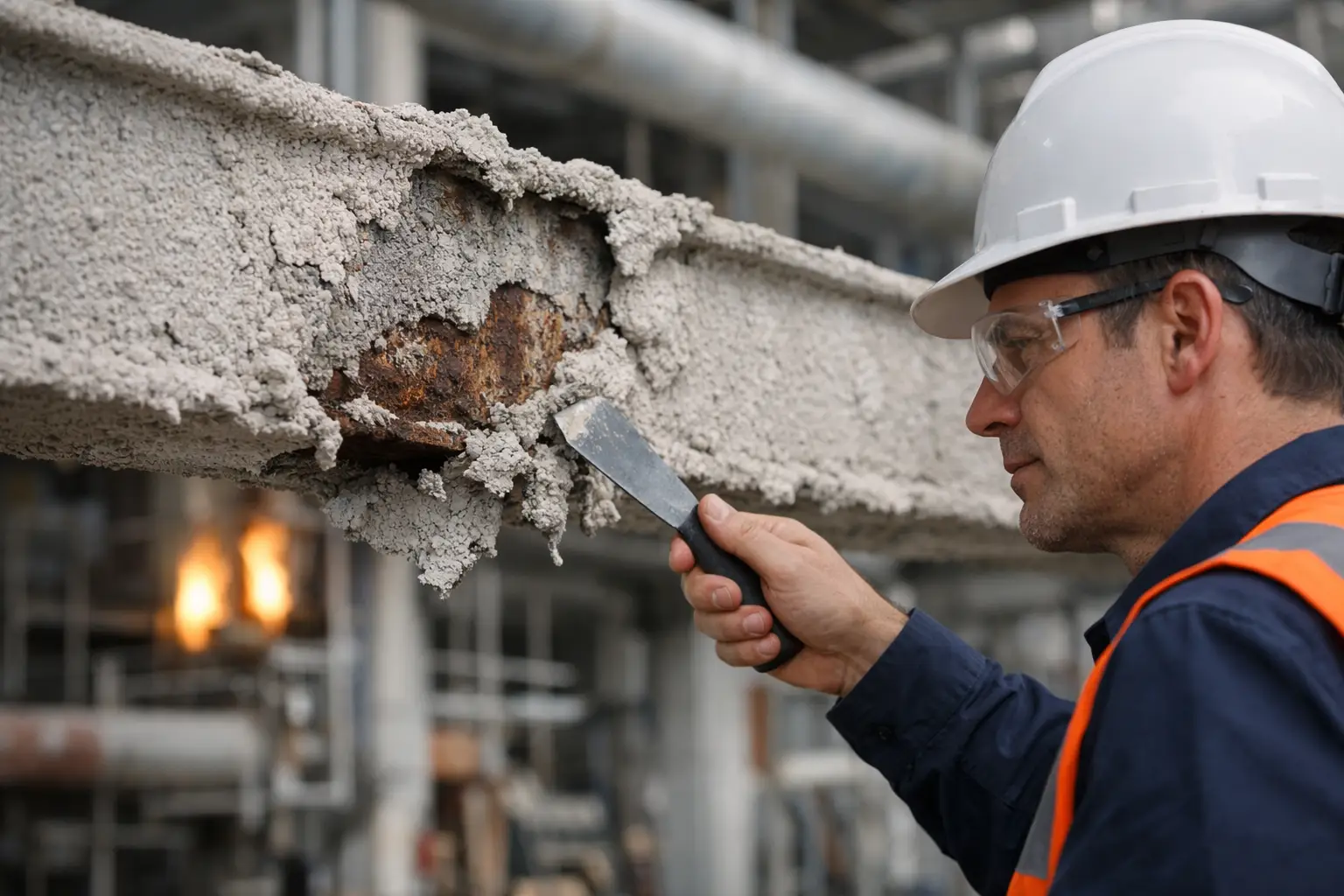
A damaged fireproofing system can turn a completed area into an inspection risk overnight. The question of when to replace damaged fireproofing is not answered by appearance alone. On a commercial project, the real test is whether the material still performs as part of its listed, rated assembly and whether the repair can be completed in a manner the authority having jurisdiction will accept.
For general contractors, facility teams, and project managers, the right response protects more than a schedule milestone. It protects structural fire resistance, compartmentation, closeout documentation, and the people who will occupy the building.
Replace fireproofing when the rated system is compromised
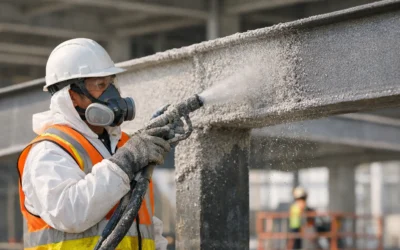
Spray-applied fire-resistive material, commonly called SFRM, protects structural steel by delaying the temperature rise that can weaken it during a fire. Its performance depends on more than having material visible on the member. Thickness, density, adhesion, substrate condition, and continuity all matter.
Replacement is generally warranted when damage removes material, exposes steel, creates significant cracks or delamination, or reduces the installed thickness below the design requirement. A shallow surface blemish may be repairable. A broad area that has been gouged, crushed, water-damaged, or pulled loose from the steel requires a more serious evaluation.
The location matters as much as the visible damage. A small missing area at a beam flange, connection, deck interface, or other transition can interrupt protection at a critical point. Repeated impact damage in a loading area or mechanical room may also indicate that a one-time patch will not hold without correcting the source of the damage.
Do not assume that adding material over a problem solves it. If the existing SFRM is loose, contaminated, saturated, or no longer bonded to the substrate, the failed material must be removed back to sound material before a compatible repair is installed. Covering delaminated fireproofing only conceals the defect and can create another inspection failure later.
Common signs that replacement is needed
Field conditions that should trigger a qualified review include exposed structural steel, hollow-sounding or loose material, widespread cracking, impact gouges, abrasion, water staining, rust bleed-through, and areas altered by other trades. Damage after tenant improvements, mechanical retrofits, cabling work, roof leaks, or demolition deserves particular attention.
Thickness is another decisive factor. SFRM thickness requirements are tied to a specific tested design, member type, restraint condition, and hourly rating. A repair cannot be judged by visual comparison to adjacent material. It must restore the required thickness and finish for the applicable assembly, using the approved manufacturer system.
When to replace damaged fireproofing after other-trade work
The most common fireproofing failures happen after the original installation has passed its initial inspection. Pipe hangers, ductwork, electrical pathways, access panels, structural modifications, and renovation work can all damage SFRM or breach fire-resistance-rated barriers.
When another trade disturbs fireproofing, the repair scope should be identified before ceilings close or finishes conceal the area. This is especially important when schedule pressure encourages crews to treat fireproofing as cosmetic cleanup. It is not cosmetic. The repair must be coordinated with the tested assembly, the material manufacturer’s instructions, and the project’s inspection requirements.
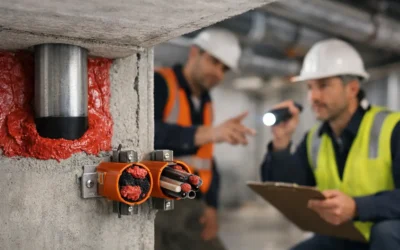
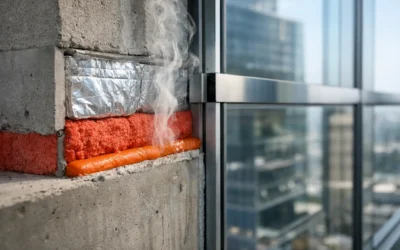
For firestop systems, replacement may be necessary when a penetrant has been added, removed, resized, or moved; when the annular space changes; or when an existing sealant, collar, wrap strip, or backing material is cut or dislodged. A firestop system is not a generic bead of sealant. It is a specific arrangement of materials tested for a particular opening, penetrant, and rating condition.
A penetration that appears small can still require a completely different UL-listed system after a trade change. The same is true for head-of-wall joints and other dynamic joints. If the joint width, movement capability, substrate, or installed product no longer matches the approved system, replacement or redesign is the compliant path.
Repair versus replacement depends on the assembly
Not every damaged area calls for full removal. A localized SFRM repair can be appropriate when the surrounding material is sound, the substrate can be properly prepared, and the replacement material can restore the specified thickness, density, bond, and finish. A qualified fireproofing contractor can verify the condition rather than turning a small repair into unnecessary demolition.
Replacement becomes the better option when the damage is widespread, recurring, moisture-related, or connected to poor adhesion. It is also the right choice when records cannot confirm the original system, when the material has been contaminated, or when field conditions have changed enough that the original listed design no longer applies.
For firestopping, the distinction is often clearer: if the installed system no longer matches an approved UL assembly or manufacturer-listed detail, replacement with the correct system is typically required. Repairs must preserve all required components, including mineral wool depth and compression, backing material, sealant depth, collars, wraps, and fasteners where applicable.
This is why documentation matters. Photos, marked-up plans, UL system numbers, product data, and repair records give the project team a defensible path through inspection and closeout. Without them, a small hidden condition can become an expensive investigation.
Water exposure changes the urgency
Water does not automatically mean that every fireproofed member must be replaced. The extent, duration, material type, and drying conditions all affect the decision. Still, water intrusion should never be treated casually, particularly after a roof leak, sprinkler discharge, flood event, or prolonged condensation issue.
Wet or repeatedly saturated SFRM can lose cohesion, detach from steel, or support corrosion concerns at the substrate. Staining alone is not a final diagnosis, but staining accompanied by softness, sagging, cracking, or loss of bond is a clear warning sign. The source of moisture must be corrected before repairs are made, or the same failure can return.
Firestop materials can also be affected by water, physical disturbance, and incompatible cleaning or coating work. After a significant water event, inspect rated walls, floor penetrations, shaft openings, and joints before they are concealed again.
Inspection-ready replacement starts with verification
The fastest route is not to send a crew in with material and hope the repair matches. The fastest reliable route is to verify the rated assembly, define the damaged limits, select an approved repair method, and coordinate access with affected trades.
A disciplined field review should establish what was originally installed, what rating is required, how far the damage extends, and whether the substrate or adjacent materials have been affected. For SFRM, this may include thickness verification, adhesion review, and evaluation against the applicable manufacturer specification. For firestop, it means matching the exact opening condition to a listed system from a manufacturer such as STI or Hilti.
On active jobsites, sequencing is part of compliance. Repairing a beam before overhead mechanical work is complete invites repeat damage. Closing drywall before firestop verification creates avoidable rework. The best corrective scope protects the inspection date by identifying these dependencies early, not by compressing the installation window at the end.
Do not let a small defect become a closeout problem
Damaged passive fire protection rarely improves with time. Areas become inaccessible, records get harder to trace, and a later inspection can expand a localized repair into a broad corrective-action scope. Facility teams face the same risk during renovations: a penetrated wall or damaged steel member may sit above a ceiling until a survey, insurance review, or incident exposes the condition.
Colonial Fireproofing approaches corrective work as a life-safety and execution issue at the same time. The goal is to identify the compliant system, restore the assembly correctly, document the work, and return the area to the project team without introducing unnecessary schedule disruption.
If material is missing, loose, altered, water-affected, or no longer consistent with the listed assembly, treat it as a fire-resistance issue first and a finish issue second. A prompt, system-specific assessment gives the team a clear repair path while access is still available and the work can still pass inspection the first time.