An expansion joint that looks sealed can still fail the building. If the material cannot accommodate real movement, bond to the substrates, withstand exposure, or satisfy the required fire-resistance rating, the result can be water intrusion, smoke migration, failed inspections, and costly corrective work. The best expansion joint sealants are not simply the products with the strongest marketing claims. They are approved systems selected for the joint, the assembly, and the conditions the building will face.
For commercial construction teams, that distinction protects more than a specification line item. It protects the schedule. Expansion joints often sit at the intersection of multiple scopes: exterior envelope, concrete, drywall, structural steel, flooring, and firestopping. A late discovery that the wrong sealant was installed can mean removing finished work, coordinating several trades, and reopening an inspection issue that should have been resolved before installation.
What Makes the Best Expansion Joint Sealants?
The right product begins with the joint’s purpose. Some joints are intended primarily to keep out weather and water. Others must maintain an acoustical separation, resist smoke movement, or preserve the fire rating between adjacent assemblies. Many commercial joints must do more than one of these jobs at the same time.
Movement capability is the first technical question. Building materials expand, contract, deflect, creep, and settle at different rates. A sealant’s stated movement rating must be appropriate for the expected joint movement, not merely the nominal joint width shown on a drawing. Joint width, depth, substrate condition, and backing material all affect whether a sealant can perform as intended.
Adhesion is equally critical. Concrete, masonry, aluminum, steel, glass, gypsum board, and coated surfaces may each require different preparation or primers. A high-performance sealant applied to dusty concrete, wet substrates, incompatible coatings, or improperly sized backer rod is not a high-performance installation. It is a future failure point.
For rated construction, fire resistance changes the conversation entirely. A fire-rated joint system is not a generic bead of sealant applied between two surfaces. It is a tested assembly with defined components, joint dimensions, backing materials, installation methods, and movement limitations. The installed condition must match the applicable UL-rated system and manufacturer instructions.
Match the Sealant Category to the Joint Condition
Commercial projects commonly use several types of expansion-joint materials. The best choice depends on exposure, movement, appearance requirements, and whether the joint is part of a rated assembly.
Silicone sealants for high movement and exterior exposure
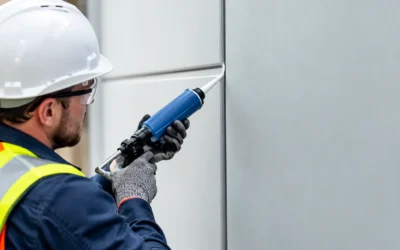
Silicone sealants are frequently specified for glazing, curtain wall interfaces, exterior perimeter joints, and other locations exposed to UV, rain, and temperature change. Quality architectural silicones maintain flexibility well over time and can accommodate substantial movement when properly detailed.
Their trade-off is compatibility and finish coordination. Not every silicone bonds equally to every substrate, and some formulations can affect adjacent coatings, paints, or porous materials. The selected product must be compatible with the full assembly, including primers, backer rod, membranes, and nearby finishes. Field adhesion testing is often the prudent step when substrates or conditions vary from the specification.
Polyurethane sealants for durable construction joints
Polyurethane sealants have long been used in concrete and masonry joints because of their strong adhesion and tough, abrasion-resistant finish. They can be an effective choice for many horizontal and vertical building joints, including areas subject to foot traffic or service conditions that would quickly damage a softer material.
They are not automatically the answer for every exterior condition. UV exposure, moisture during installation, cure time, and movement requirements must be reviewed carefully. Some polyurethane products require protection or a compatible coating in exposed applications. The product data and project specification should drive the decision, not familiarity with a product type.
Hybrid sealants where adhesion and application flexibility matter
Hybrid polymer sealants can offer useful adhesion across varied substrates and may perform well where construction sequencing creates difficult application conditions. They are often selected for specific envelope, interior, or general sealing applications.
However, a hybrid sealant should not be substituted into a tested firestop joint system or specified weatherseal detail simply because it appears similar. Similar chemistry does not establish equivalent movement capacity, weathering performance, or fire-test compliance. Substitutions require formal review and approval.
Firestop joint sealants for rated assemblies
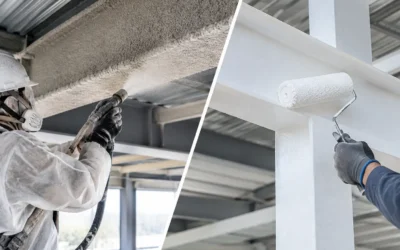
At head-of-wall joints, curtain wall perimeter joints, floor-to-wall joints, and other fire-resistance-rated separations, firestop sealants may be part of a larger joint system. These materials are engineered to limit the passage of fire and smoke while allowing the movement documented by the tested design.
Some systems use elastomeric firestop sealants. Others incorporate mineral wool, sprays, coatings, preformed devices, or intumescent components. The right answer is determined by the listed assembly, not by a preference for one material. A system that works at a static interior joint may be entirely wrong at a dynamic perimeter containment joint.
Fire-Rated Expansion Joints Require a System, Not a Shortcut
The most common compliance mistake is treating firestopping as a finish trade instead of a life-safety system. If an expansion joint is part of a fire-rated wall or floor assembly, the firestop scope must be coordinated before finishes conceal the joint condition.
A compliant system identifies the required joint width, movement range, joint orientation, substrate type, backing material, sealant depth, and installation configuration. It also establishes the hourly rating and, where applicable, the L-rating for air leakage and smoke control. Those details matter to the inspector because they are the details that were tested.
For example, a joint at the top of a fire-rated partition must accommodate deflection from the structure above. Filling that joint tightly with a nonmoving material can transfer load to the wall, crack finishes, or compromise the intended firestop condition. Conversely, using a flexible material without confirming a listed head-of-wall system leaves the rating unsupported.
The same principle applies at perimeter fire containment joints around curtain wall systems. The gap may be concealed behind spandrel glass or interior finishes, but it remains a critical line of defense. The assembly must account for the exterior wall construction, slab edge, insulation, safing, curtain wall components, and required movement. These are not conditions for field improvisation.
Evaluate the Jobsite Before the Product
Product selection should begin during submittals and scope review, not when the crew arrives with sealant guns. The construction team needs clear answers about the joint’s location, anticipated movement, exposure, substrates, required rating, finish requirements, and access constraints.
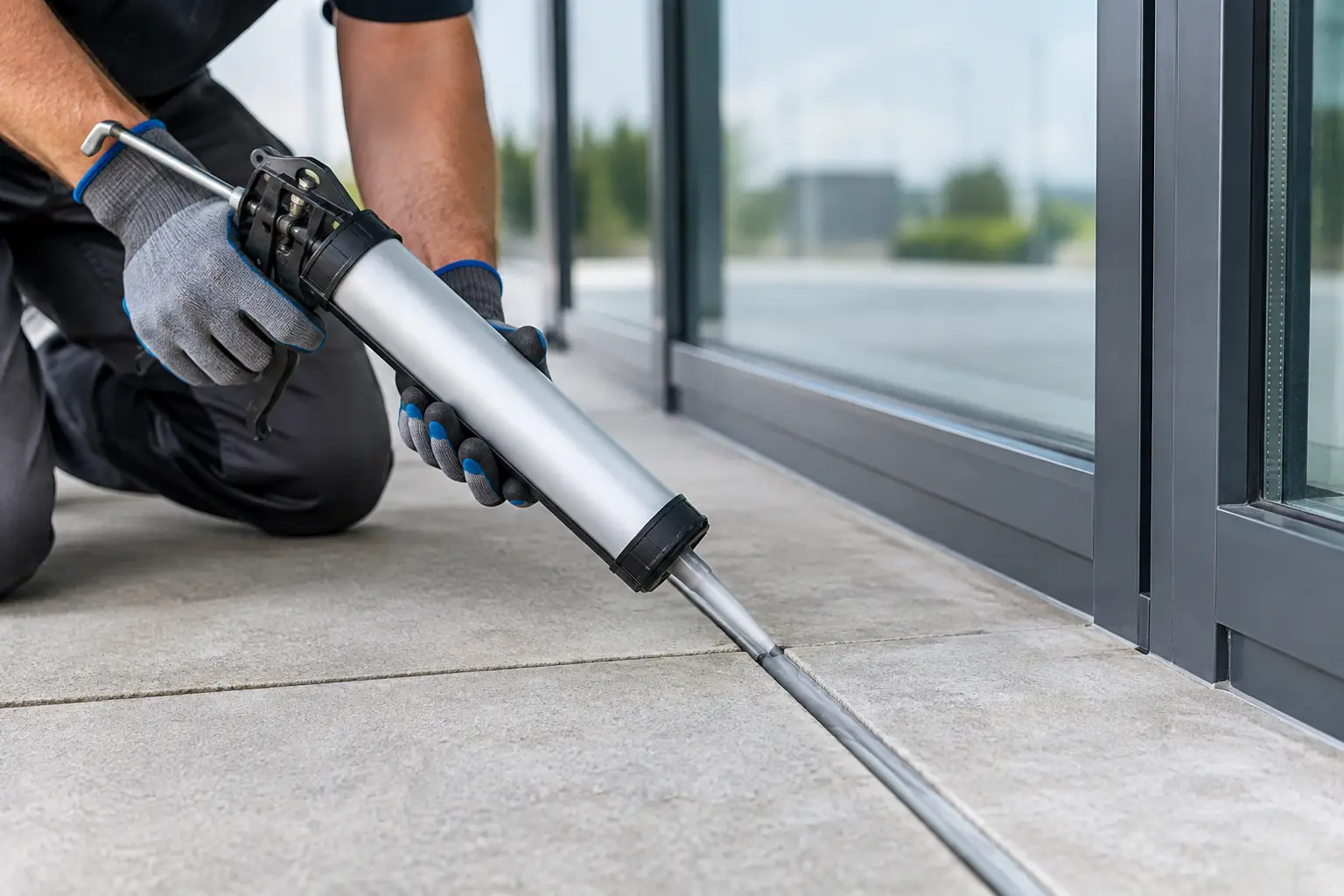
Joint geometry deserves particular attention. Sealant depth and width are not interchangeable. A joint that is too deep may restrict movement, while a joint that is too shallow may lack the intended performance. Properly sized backer rod supports the sealant profile, prevents three-sided adhesion where it is not intended, and helps crews maintain consistent installation.
Environmental conditions also affect execution. Temperature, substrate moisture, rain exposure, dust, frost, and curing time can determine whether a sealant bonds properly. On an active commercial site, these issues must be planned around concrete pours, façade progress, interior close-in, and other trade activity. The fastest installation is not the one that happens first. It is the one that does not need to be removed and repeated.
Documentation should follow the installation, especially for rated joints. Product identification, listed-system references, installed locations, inspection records, and photographs provide a defensible closeout package. This is valuable during AHJ review, but it also gives facility teams a record of what is behind finished surfaces when future renovations occur.
A Practical Selection Process for Commercial Teams
Before specifying or approving an expansion joint sealant, confirm four items: the expected movement, the exposure conditions, the substrates and joint geometry, and whether the joint must maintain a fire or smoke rating. Once those conditions are defined, compare only products and systems that meet them.
If the joint is rated, start with the tested assembly. Select the UL-listed or otherwise approved system that matches the field condition, then follow its components and installation requirements without unauthorized substitutions. If the as-built condition does not match the listing, resolve it with the design team, manufacturer, and qualified firestop specialist before work proceeds.
If the joint is exterior or water-management critical, confirm the sealant’s movement classification, UV resistance, adhesion requirements, and compatibility with adjacent materials. Mockups and adhesion tests may add a small amount of time early, but they are far less expensive than tracking a leak through a completed building.
Colonial Fireproofing approaches fire-rated joint work with this same discipline: verify the condition, match it to an approved system, install it to the listing, and document the completed work for inspection. When the joint is difficult, concealed, or arriving late in the schedule, early specialist review is the most reliable way to avoid an avoidable correction.
The right expansion-joint sealant is the one that stays flexible where movement occurs, remains bonded where exposure is severe, and preserves the rated assembly where life safety is on the line. Make that decision before the walls close, not when the inspector asks what is inside the joint.