
A data center penetration can look insignificant beside a row of cabinets, a major UPS installation, or miles of pathway. But when cables, conduits, and pipe systems pass through a rated wall or floor, every opening becomes part of the building’s life-safety strategy. The best data center firestops are not simply the products with the highest ratings or the fastest installation time. They are tested, approved systems selected for the exact assembly, penetrant configuration, movement requirement, and future service demands at that location.
For general contractors, facility teams, and project managers, the practical goal is clear: protect compartmentation, pass inspection the first time, and avoid reopening finished work when the data infrastructure changes. That requires more than filling a void with sealant. It requires disciplined system selection, field coordination, and documentation that can stand up to AHJ review.
What Makes the Best Data Center Firestops Different
Data centers put unusual pressure on passive fire protection. They contain dense cable pathways, frequent technology refreshes, raised-floor conditions, redundant mechanical and electrical systems, and a high expectation of continuous operation. A firestop installation that works well in a conventional office fit-out may not be the right answer for a critical facility.
The best solution begins with a tested UL-listed assembly. The system must match the wall or floor construction, rating, penetrant type and size, annular space, insulation condition, and required fire-resistance period. It must also address the conditions that make the penetration unique. A cable bundle is not interchangeable with a single conduit, and a sleeve intended for repeated cable additions is not interchangeable with a permanently sealed opening.
A manufacturer name alone does not make a firestop compliant. STI and Hilti both offer proven firestop technologies, but the installed system is what matters. The materials, installation details, and field conditions must align with the applicable listing and manufacturer instructions. Substituting a component, changing the opening size, or installing a system outside its tested limitations can turn a seemingly finished penetration into an inspection issue.
Cable density and future moves, adds, and changes
Cable management is usually the deciding factor in data center firestop design. New runs are added. Old runs are abandoned. Capacity is expanded under schedule pressure. If each future cable pull requires removing and rebuilding a firestop system, the facility inherits avoidable disruption and a higher risk of unsealed openings.
For high-traffic pathways, re-enterable systems can be the right choice. Modular devices, transit systems, and purpose-designed cable management firestops can maintain the rating while allowing controlled changes. The trade-off is that these systems demand precise sizing, correct module selection, and clear ownership after turnover. A re-enterable pathway is only effective when the people making changes understand how to preserve the listed condition.
Where a penetration is not expected to change, a conventional sealant, putty, mortar, or cast-in device may be more appropriate. The best choice depends on the rated assembly and operational plan, not on a preference for one material category.
Start With the Rated Assembly, Not the Opening
A common field mistake is treating firestopping as a final punch-list activity. By the time the firestop contractor arrives, pathways may be overloaded, sleeves may be improperly located, and access may be blocked by cable tray, equipment, or finished surfaces. The crew is then asked to solve a coordination problem with a firestop material.
That approach creates rework. It can also leave the project with penetrations that do not cleanly fit a listed system.
The better process starts during coordination. Review rated wall and floor locations alongside electrical rooms, telecommunications spaces, generator support areas, UPS rooms, cooling infrastructure, and risers. Confirm which penetrations will be permanent, which require future capacity, and which assemblies require a joint system rather than a penetration system. These conversations are most valuable before rough-in is complete.
The same principle applies to perimeter containment and head-of-wall conditions. Building movement, deflection, and seismic requirements can affect the approved firestop approach. A penetration seal does not solve a dynamic joint, and a joint system should not be selected without confirming the movement capability required by the assembly.
Penetrations are only part of the scope
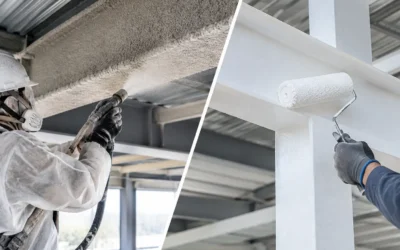
A data center’s fire-resistance strategy may include floor-to-floor pathways, wall penetrations, cable trays, conduits, ducts, structural interfaces, and linear joints. Each condition requires separate evaluation. Firestopping protects the continuity of a rated assembly, while spray-applied fire-resistive materials protect structural members where specified. Both are passive fire-protection systems, but they serve different functions and should be coordinated accordingly.
Treating all fire protection as one generic scope creates gaps between trades. Clear scope boundaries, marked rated barriers, and early site walks help prevent those gaps from becoming failed inspections.
Inspection-Ready Installation Depends on Field Discipline
Data center firestops are often installed in constrained spaces, above ceilings, below raised floors, and around active equipment. Those realities do not relax listing requirements. They make experienced installation more necessary.
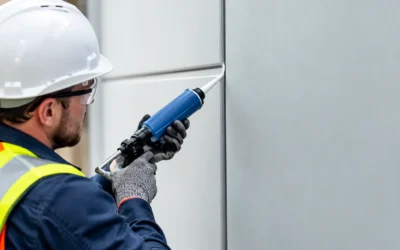
An inspection-ready installation begins with proper surface preparation and access. The opening must be sized and configured within system limits. Penetrants must be supported as required. Materials must be installed to the listed depth, fill, compression, or wrap configuration. Labels and identification should remain visible where required, and completed work should be protected from subsequent trade damage.
Quality control also means identifying conditions that do not fit the intended system. A firestop professional should not force a standard detail onto an oversized opening, mixed penetrant bundle, or unapproved wall type simply to keep work moving. A listed engineering judgment may be needed for unusual conditions. That process should be controlled, project-specific, and accepted by the authority having jurisdiction when required, not used as a substitute for proper planning.
Inspection performance depends on documentation as much as installation. A complete closeout package typically ties field locations to approved systems, product data, relevant UL design information, inspection records, and photographs where the project requires them. This gives the construction team a defensible record and gives the owner a clearer path for maintaining the system after occupancy.
How to Choose a Firestop Partner for a Critical Facility
The best data center firestops will only perform as intended if the subcontractor can execute under real jobsite conditions. For a critical facility, evaluate more than labor availability or unit price. Confirm the team understands UL-rated assemblies, manufacturer specifications, NFCA expectations, and the documentation standards built into the project.
Ask how the contractor handles field conditions that differ from drawings. Ask whether system selection is reviewed before installation, how quality is verified in congested locations, and how closeout documentation is organized. Also ask about response time when a late-added conduit, cable route, or failed inspection threatens the schedule.
A capable trade partner can help resolve these conditions before they create a critical-path delay. Colonial Fireproofing brings certified STI instructor oversight, access to more than 3,800 UL-rated firestop assemblies, and field crews prepared for both planned installations and corrective work across New England.
Plan for the Facility’s Next Change, Not Just Turnover
A clean final inspection is essential, but it is not the end of the firestop obligation. Data centers evolve. Every added cable, removed conduit, or altered sleeve can affect a rated barrier. The best long-term firestop strategy includes a clear record of approved systems and a process for bringing qualified personnel back when pathway conditions change.
That discipline protects the original construction investment, supports future audits, and reduces the chance that routine technology work compromises compartmentation. When the next cable pathway is needed, treat the rated wall or floor as a life-safety assembly first and an access route second. That decision keeps the facility prepared long after the construction schedule is gone.