A steel package can look straightforward on drawings and still become an inspection or schedule problem in the field. The decision between SFRM versus intumescent coatings affects more than appearance. It affects tested assembly compliance, sequencing, trade coordination, repair exposure, and whether the structural fire-protection scope is ready when the inspector arrives.
For commercial projects, neither system is automatically better. The correct choice is the one that meets the required fire-resistance rating, matches the listed design, performs in the intended environment, and can be installed and documented without introducing avoidable rework. That requires early coordination between the design team, general contractor, steel trades, finish trades, and qualified fireproofing installer.
SFRM Versus Intumescent Coatings: The Core Difference
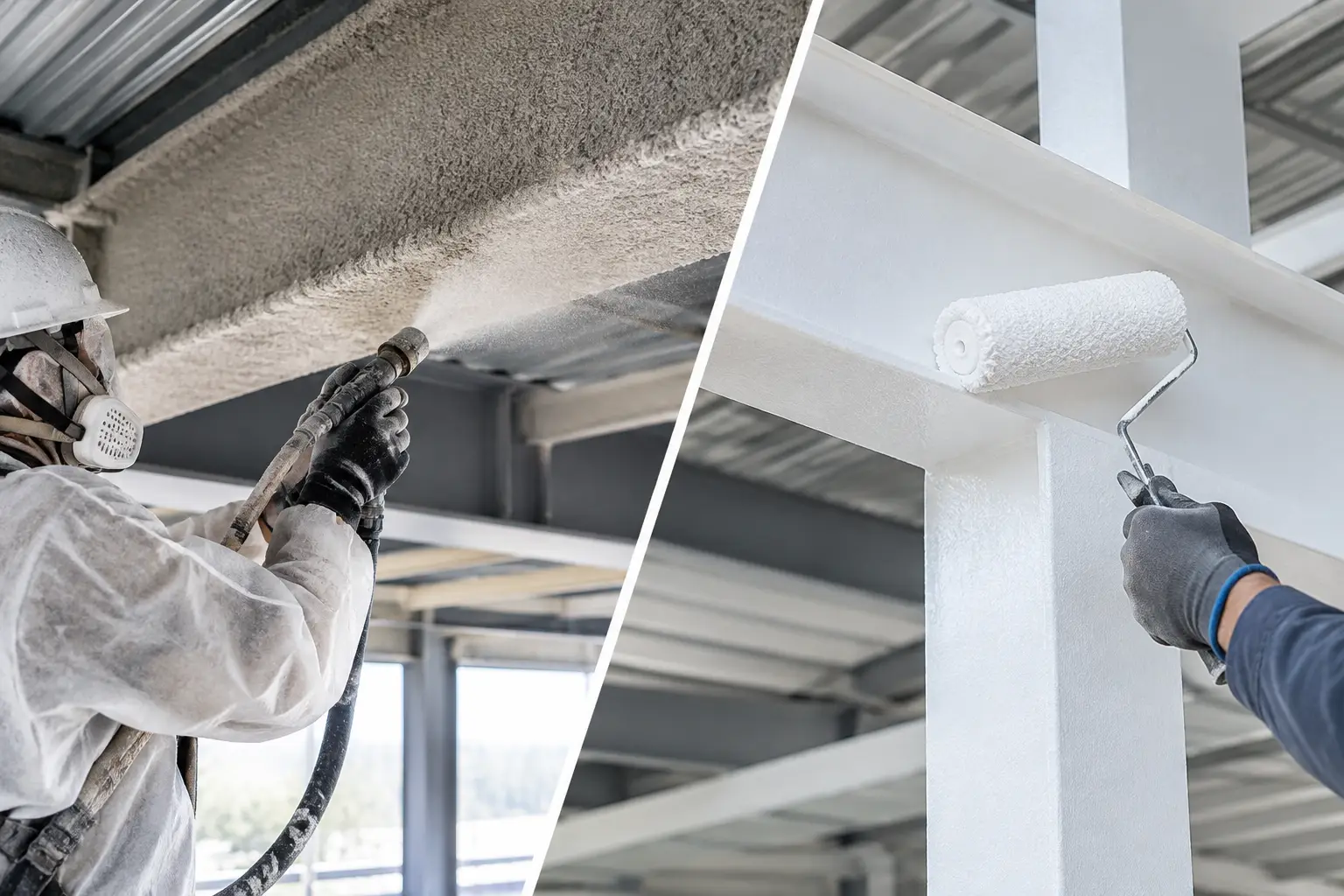
Spray-applied fire-resistive material, commonly called SFRM, is a spray-applied material used to protect structural steel and other building elements. Depending on the specified system, it may be cementitious or mineral-fiber based. It is applied at a prescribed thickness to achieve the hourly rating established by a tested and listed fire-resistance design.
Intumescent coating is a thin-film or thick-film fire-protection coating applied to steel. Under elevated heat, the coating expands into an insulating char layer that slows the temperature rise of the steel. Like SFRM, it is not selected by preference alone. Its required thickness, primer and topcoat requirements, steel profile assumptions, and rating must align with the manufacturer documentation and the approved listed design.
The visible difference is immediate. SFRM generally leaves a textured, sprayed finish and adds more thickness to the steel. Intumescent coatings can preserve a cleaner, more architectural steel appearance. The performance decision, however, belongs in the tested-system documentation and project specifications, not in a product brochure or a field assumption.
Where SFRM Makes Practical Sense
SFRM is often the efficient, cost-conscious solution for concealed structural steel in commercial construction. It is commonly used above ceilings, inside shaft areas, in mechanical spaces, parking structures where the specified system is suitable, and other locations where exposed finish quality is not the central design requirement.
Its biggest jobsite advantage is production. On a properly prepared steel package, experienced crews can cover substantial areas quickly. That can support aggressive schedules when steel, decking, hangers, mechanical rough-in, and ceiling work are being actively coordinated. It is particularly effective when the design calls for a conventional sprayed fireproofing assembly and the project can provide clear access for installation.
That speed does not mean shortcuts. SFRM requires substrate preparation, correct material selection, thickness control, adhesion, density or cohesion verification where required, and protection from damage by following trades. Material applied before the jobsite is ready can be scarred by steel modifications, MEP installation, or other overhead work. Those repairs may seem minor, but undocumented or inconsistent patching can create inspection questions at the worst possible time.
SFRM also has physical implications that need to be addressed early. It adds thickness around beams, columns, connections, and deck flutes. Ductwork, piping, cable tray, access panels, and ceiling elevations must account for that space. A clear coordination conversation before mobilization is much less expensive than trying to force systems into a congested overhead condition after fireproofing is installed.
When Intumescent Coatings Are the Better Fit
Intumescent coatings are often specified where structural steel will remain exposed and the architectural intent calls for a refined finish. Lobbies, atriums, public-facing spaces, adaptive-reuse projects, and exposed structural concepts are common applications. The coating can follow the geometry of the steel more closely than SFRM, allowing the structure to remain part of the finished design.
The finish benefit comes with tighter controls. Intumescent systems are coating systems, and the coating process matters. Surface preparation, compatible primers, environmental conditions, wet-film and dry-film thickness measurement, cure time, handling protection, and topcoat compatibility may all affect the finished system. Field crews need the right conditions and enough protected time to deliver the specified result.
That makes intumescent coatings less forgiving of late design changes and uncontrolled trade activity. Welding, bolted-connection changes, added attachments, abrasion, and unplanned penetrations can damage the coating or alter protected steel conditions. Repairs must follow the approved manufacturer procedure and be documented. A visually clean system should not be mistaken for a simple system.
Cost is also a real consideration. Intumescent coatings can carry higher material, surface-preparation, labor, and quality-control costs than conventional SFRM. That premium may be justified when exposed steel is integral to the design. It may not be justified above an acoustical ceiling where the same rating can be achieved with an appropriate SFRM system. The right conversation is not “Which material costs less per gallon?” It is “Which listed system delivers the required rating, finish, durability, and schedule outcome for this location?”
The Rating Is Determined by the Listed Design
A one-hour or two-hour requirement does not, by itself, tell the installer what to apply. Fire-resistance ratings are tied to specific conditions: member type, steel shape or mass, restraint condition, assembly configuration, material, thickness, and sometimes additional protection or finish requirements. The approved UL design, manufacturer documentation, specifications, and authority having jurisdiction requirements must work together.
For steel protection, the weight per foot or section factor can significantly affect the required thickness. A lighter steel member heats faster in a fire and may require more protection than a heavier member within the same rating category. Connections, castellated members, joists, deck interfaces, and changes in steel geometry can also require specific attention.
This is where early review protects the project. If a design number is missing, a beam designation has changed, or the specified protection does not clearly correspond to the framing condition, resolve it before installation. Trying to solve a listing question after ceilings are closed or finishes are complete puts the entire team at risk of delay and costly access work.
Schedule and Sequencing Decide More Than Most Teams Expect
The best specified material can still fail the schedule if the work is sequenced poorly. SFRM needs access, suitable site conditions, and coordination with the steel and overhead trades. Intumescent coating needs controlled preparation, specified ambient conditions, cure windows, and protection from damage. Each system has a different critical path.
For SFRM, the general contractor should identify when steel is complete enough for productive installation and when follow-on trades can work without damaging the applied material. For intumescent work, the team should confirm when steel fabrication, field modifications, final welding, and architectural decisions are sufficiently complete to avoid repeated repairs.
Both systems benefit from a preinstallation review that confirms scope limits, rating locations, substrate conditions, staging, access, inspection points, and repair responsibility. That is not administrative overhead. It is how the team avoids discovering an unprotected member, incompatible coating, or inaccessible repair area during a fire inspection.
Documentation Is Part of the Installed System
Inspection-ready fireproofing is not just material on steel. It is a verifiable installation supported by the correct submittals, listed design information, product data, thickness records where applicable, field quality-control records, repair documentation, and closeout materials.
Project teams should expect the fireproofing subcontractor to identify conflicts early, communicate field conditions directly, and maintain records that support inspection. Colonial Fireproofing approaches this work as a life-safety scope, not a coverage exercise. The goal is a compliant system installed to the approved requirements and prepared for review the first time.
Select the System Before It Becomes a Field Problem
Choose SFRM when the listed system, project environment, budget, and concealed conditions support a spray-applied solution. Choose intumescent coatings when exposed architectural steel, finish expectations, and controlled application conditions justify a coating-based system. In either case, confirm the specific rating design and installation requirements before materials arrive on site.
The most useful decision is the one made early enough to protect the steel, the schedule, and the inspection path. When the fire-resistance scope is treated with the same discipline as structure and MEP coordination, it stops being a late-stage correction and becomes what it should be: dependable life-safety work that is ready when the building needs it.